Impact of Amortization on Payments: A Complete Guide for Quebec Homeowners
Amortization is one of the most powerful levers in mortgage planning. This guide explains how changing your amortization period influences your monthly cash flow and long-term interest costs.
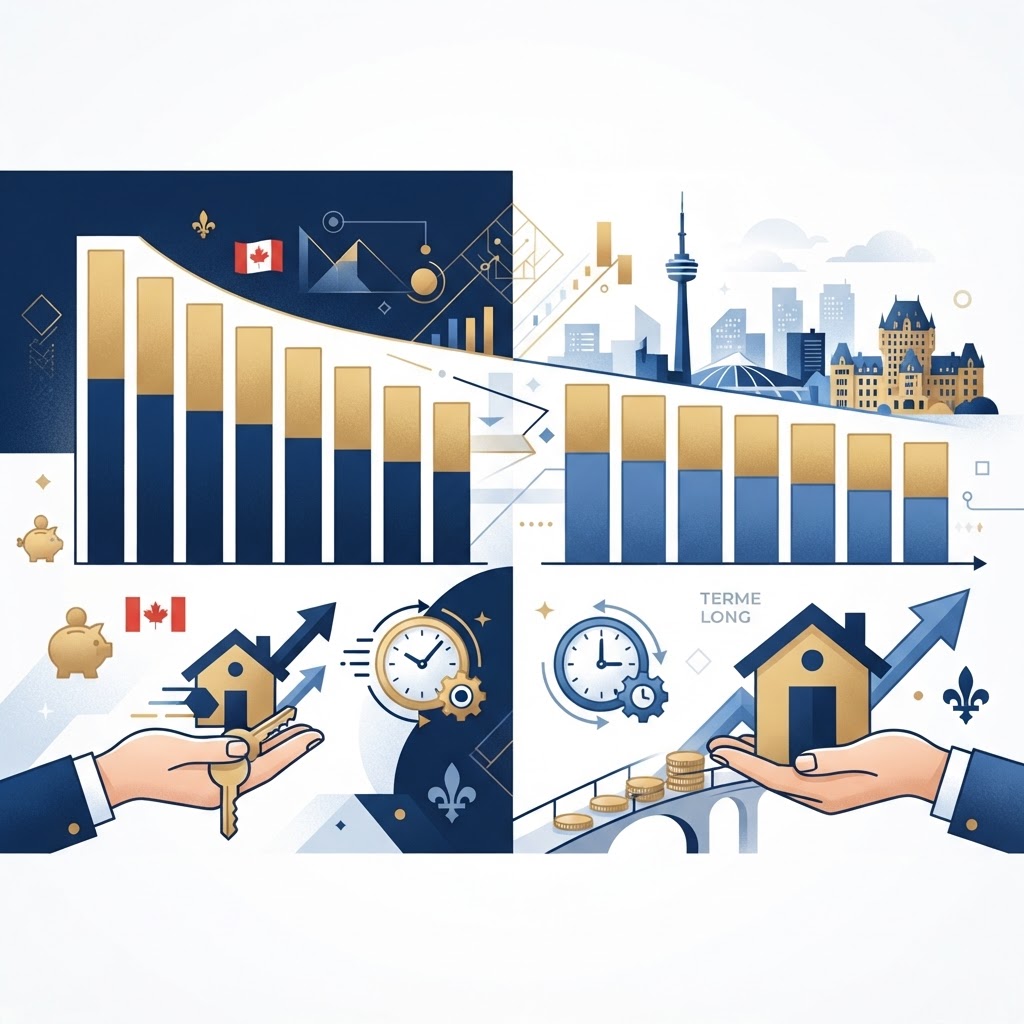
Impact of Amortization on Payments: A Complete Guide for Quebec Homeowners
When navigating the complex world of Canadian real estate, few factors influence your financial health as significantly as your mortgage structure. While many buyers focus solely on the interest rate, the Impact of Amortization on Payments is often the unsung hero—or villain—of a homeowner's long-term budget.
In simple terms, amortization is the total length of time it takes to pay off your mortgage in full through regular payments. Unlike the mortgage term (which is the duration of your current legal agreement with a lender, typically 1 to 10 years), the amortization period spans decades. Understanding how this timeline dictates your monthly obligations and your total interest expense is crucial for anyone considering a home purchase in Quebec.
The Direct Impact of Amortization on Payments
The most immediate way amortization affects a borrower is through the monthly (or bi-weekly) payment amount. There is an inverse relationship between the length of the amortization and the size of the payment:
- Longer Amortization: Results in lower monthly payments because the principal balance is spread over a greater number of months.
- Shorter Amortization: Results in higher monthly payments because you are required to pay back the principal much faster.
For many first-time buyers in cities like Montreal or Gatineau, a longer amortization is often a tool used to improve monthly cash flow or to qualify for a larger loan amount. However, this flexibility comes at a price. The Impact of Amortization on Payments isn't just about what leaves your bank account each month; it's about how much of that money actually goes toward your house versus the bank's profit.
Comparing 25-Year vs. 30-Year Amortization
In Canada, the standard amortization for an insured mortgage (where the down payment is less than 20%) is 25 years. If you have a down payment of 20% or more, you may have the option to extend this to 30 years. Let's look at a concrete example to see the numbers in action.
Calculation Comparison
Suppose you are looking at a home with a $500,000 mortgage balance at a fixed interest rate of 4.79%.
- 25-Year Amortization:
- Monthly Payment: $2,847.62
- Total Interest Paid Over 25 Years: $354,285.90
- 30-Year Amortization:
- Monthly Payment: $2,605.51
- Total Interest Paid Over 30 Years: $437,984.72
The Verdict: By choosing a 30-year amortization, the borrower saves roughly $242 per month in cash flow. However, the Impact of Amortization on Payments over the long haul results in paying an additional $83,698.82 in interest.
Note: These figures are estimates based on a 5-year fixed term, a 20% down payment, and rates current as of August 2024. Market fluctuations and individual credit profiles will affect actual results.
Total Interest Cost: The Hidden Weight
While the monthly payment is what we see in our budget apps, the total interest cost is what defines our net worth in the future. A shorter amortization period forces you to pay down the principal balance faster. Because interest is calculated based on the remaining principal, a faster reduction in principal leads to a compounding effect of savings.
When you understand the Impact of Amortization on Payments, you realize that even a small reduction in the period—say, from 25 years to 22 years—can save tens of thousands of dollars. This is why many financial advisors suggest that homeowners look at their mortgage renewal as an opportunity to shorten their amortization if their income has increased, rather than simply hunting for the lowest rate.
Canadian Mortgage Regulations and Amortization Limits
The Canadian government, through the Canada Mortgage and Housing Corporation (CMHC), sets strict rules on amortization to ensure the stability of the housing market.
Insured Mortgages
If your down payment is between 5% and 19.99%, you must purchase mortgage default insurance. Under federal law, the maximum amortization for these "high-ratio" mortgages is 25 years. This is designed to prevent borrowers from taking on too much debt by stretching payments over too long a period.
Uninsured Mortgages
If you have 20% equity or more, you are in the "conventional" mortgage category. Lenders in Quebec and across Canada often allow up to a 30-year amortization for these loans. Some alternative lenders might offer even longer periods, though these are less common and often come with higher interest rates. The Bank of Canada monitors these lending trends to assess household debt risks.
Strategic Advantages of Different Amortization Lengths
Benefits of a Shorter Amortization (e.g., 15-20 years)
- Interest Savings: As demonstrated, the total cost of borrowing drops significantly.
- Equity Building: You own 100% of your home much sooner, which is ideal for those nearing retirement.
- Psychological Freedom: Being mortgage-free sooner provides immense peace of mind.
Benefits of a Longer Amortization (e.g., 30 years)
- Improved Cash Flow: Lower monthly obligations leave more room for other investments, emergency funds, or lifestyle expenses.
- Increased Qualification Power: Lower payments can help you pass the "Stress Test," potentially allowing you to buy a home that fits your family's needs better.
- Flexibility: You can often take a 30-year amortization to keep your mandatory payment low, but use "pre-payment privileges" to pay it off as if it were a 20-year mortgage. This gives you a safety net if your income fluctuates.
How the Quebec Market Influences Your Choice
In Quebec, where property taxes and heating costs (Hydro-Québec) can vary significantly between regions like the Eastern Townships and Greater Montreal, managing your monthly "shelter cost" is vital. The Impact of Amortization on Payments allows Quebecers to balance these regional cost variations. For instance, a buyer in a higher-tax municipality might opt for a 30-year amortization to keep their total monthly housing cost within 32% of their gross income.
Tips for Optimizing Your Amortization Strategy
- Use Pre-payments: Even if you choose a 25-year amortization for the lower payments, most Quebec lenders allow you to pay an extra 10-20% of the principal annually. This effectively shortens your amortization without the legal obligation of higher monthly payments.
- Align with Career Milestones: If you expect a significant raise or a bonus structure, plan to decrease your amortization at your next renewal.
- Calculate the Opportunity Cost: Sometimes, the money saved by having a 30-year amortization (the lower monthly payment) can yield a higher return if invested in a TFSA or RRSP, especially if mortgage rates are low. However, this requires disciplined investing.
- Consult a Professional: Every financial situation is unique. You can learn more about our team and how we help by visiting our about us page.
Conclusion
The Impact of Amortization on Payments is a fundamental concept that every borrower must master. While a longer amortization offers the breathing room of lower monthly costs, the trade-off is a significantly higher total interest bill over the life of the loan. Conversely, a shorter amortization is a disciplined path to wealth and debt-free living, provided your budget can handle the higher monthly strain.
Are you ready to see how different amortization scenarios look for your specific situation? Whether you are buying your first home or looking to optimize your current mortgage, our experts are here to help. Contact us today for a personalized analysis, or browse our blog for more tips on mastering the Quebec mortgage market.
Disclaimer: All mortgage calculations provided in this article are estimates for educational purposes only. Rates, terms, and conditions are subject to change based on lender policies, borrower creditworthiness, and market conditions at the time of application.
Mots-clés :