Documents Needed for a Mortgage Preapproval in Quebec: A Complete Guide
Securing a mortgage preapproval is a critical first step in the Quebec real estate market. This guide outlines the essential documents you need to prepare to verify your financial health and borrowing capacity.
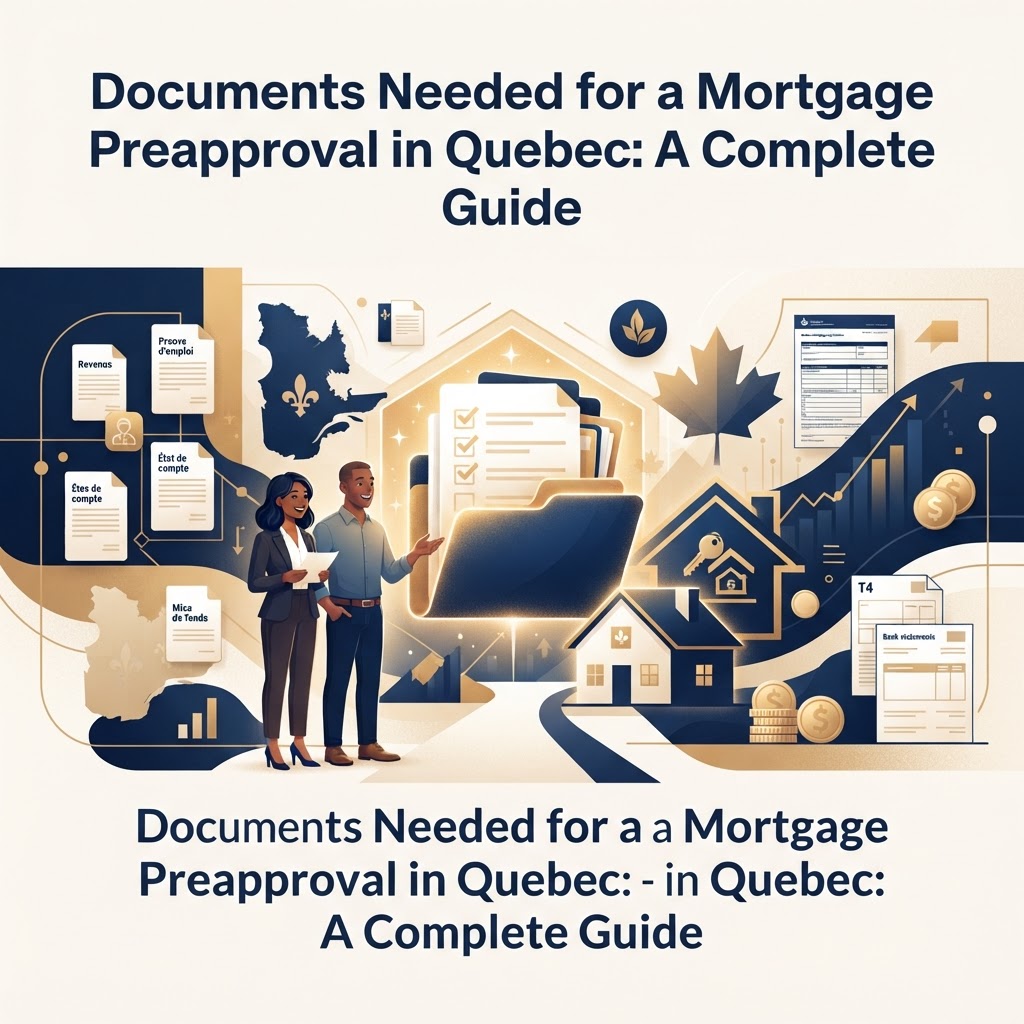
Documents Needed for a Mortgage Preapproval in Quebec: A Complete Guide
Embarking on the journey to homeownership in Quebec is an exciting milestone. Before you start visiting properties, securing a mortgage preapproval is the most strategic move you can make. A preapproval provides a clear picture of your borrowing capacity, allowing you to shop with confidence. To get started, you will need to gather specific financial records. Understanding the documents needed for a mortgage preapproval is essential to ensure a smooth and efficient application process with your broker at TiTaux.ca.
What is a Mortgage Preapproval?
A mortgage preapproval is a formal assessment by a lender that determines the maximum amount they are willing to lend you based on your financial profile. Unlike a pre-qualification, which is often just a quick estimate, a preapproval involves a thorough review of your income, debts, and credit history [2]. It acts as a commitment from the lender, subject to certain conditions like the property appraisal and your financial situation remaining stable [2].
Essential Documents Needed for a Mortgage Preapproval
To verify your financial stability, lenders require a standard set of documents. Having these organized in advance will significantly speed up your application [7].
1. Proof of Identity
Federal anti-money laundering regulations require lenders to verify your identity [5, 8]. You will typically need:
- A valid government-issued photo ID (e.g., Driver’s license or Passport).
2. Proof of Income and Employment
Lenders need to confirm your ability to repay the loan [1, 7].
- Employment Letter: Must be recent (dated within the last 30 days) and confirm your position, salary, and length of employment [3].
- Pay Stubs: Your most recent 2-3 pay stubs [3].
- Tax Documents: Your last two years of Notice of Assessments (NOA) and T1 General tax returns [3].
- Self-Employed Individuals: If you are self-employed, expect to provide 2-3 years of personal tax returns and potentially business financial statements [8].
3. Proof of Down Payment
Lenders must verify the source of your down payment to comply with anti-money laundering laws [5].
- Bank Statements: Usually the last 90 days of statements showing the accumulation of your down payment funds [3].
- Gift Letter: If a portion of your down payment is a gift from a family member, a signed letter confirming it is a gift and not a loan is required.
4. Debt and Asset Disclosure
Your debt-to-income ratio is a key factor in your borrowing capacity [1].
- Debt Information: Details on car loans, student loans, lines of credit, and credit card balances [1].
- Other Assets: Information regarding other properties, investments, or significant assets [1].
Understanding Your Borrowing Capacity
When calculating your potential mortgage, lenders look at your Gross Debt Service (GDS) and Total Debt Service (TDS) ratios. For example, if you are looking at a property with a $400,000 mortgage at a 5% interest rate (as of May 2024 context) with a 20% down payment ($100,000) over a 25-year amortization period, your monthly payment would be approximately $2,325. Note: This is an estimate only. Actual rates and borrowing capacity depend on your specific credit profile, current market rates, and lender criteria.
Why Work with a Mortgage Broker?
Navigating the complexities of the Quebec mortgage market can be challenging. A broker at TiTaux.ca can help you gather the necessary paperwork, compare rates from multiple lenders, and guide you through the purchase process. Whether you are a first-time buyer or looking for a renewal, professional advice is invaluable.
Helpful Resources
For more information on the home-buying process in Canada, you can consult the Financial Consumer Agency of Canada or the Canada Mortgage and Housing Corporation (CMHC).
By preparing these documents needed for a mortgage preapproval early, you position yourself as a serious buyer, ready to act when you find your dream home. Visit our blog for more tips on navigating the Quebec real estate market.
Mots-clés :